The world of sound design for weapons in media and gaming has undergone a radical transformation in recent years. Gone are the days when generic stock sounds would suffice for gunfire, explosions, or blade clashes. Today, the demand for hyper-realistic weapon sound effects has led to an intricate process of physical sampling that blends science, artistry, and cutting-edge technology.
The Science Behind Weapon Sound Sampling
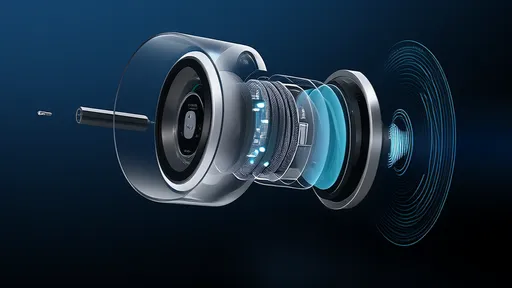
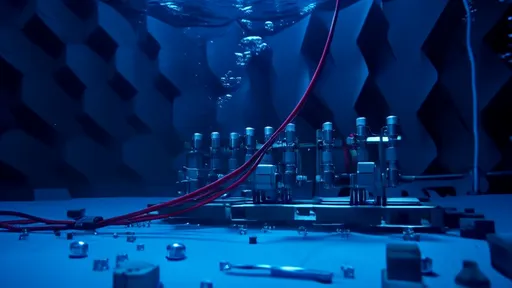
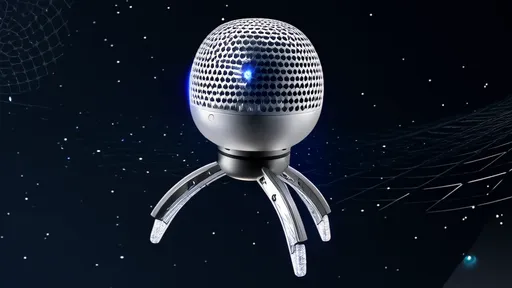
Capturing authentic weapon sounds isn't as simple as pointing a microphone at a gun range. The process involves understanding complex acoustic physics - how sound waves propagate differently in open fields versus urban environments, how temperature and humidity affect sonic characteristics, and how various materials absorb or reflect specific frequencies. Professional sound teams often employ arrays of specialized microphones placed at multiple distances and angles to capture the full spectrum of a weapon's sonic signature.
High-speed cameras frequently accompany the audio recording process, allowing engineers to precisely synchronize visual events with their corresponding sounds. This is particularly crucial for weapons where multiple sonic events occur in rapid succession - the mechanical action of a bolt cycling, the supersonic crack of a bullet, and the reverberating boom of the muzzle blast all happen within milliseconds yet create distinct auditory components.
Challenges in Field Recording
Field recording for weapons presents unique challenges that test both equipment and personnel. The extreme dynamic range of gunshots - often exceeding 160 dB - requires specialized microphones and preamps that can handle such pressure levels without distortion. Many teams use military-grade hearing protection modified with microphone ports to allow safe monitoring during recording sessions.
Environmental factors add another layer of complexity. Wind can ruin carefully planned recording sessions, while ambient noise from wildlife or distant civilization can contaminate samples. Some teams go to extraordinary lengths, renting private islands or securing permits for remote military testing grounds to achieve pristine recordings. The logistical challenges multiply when recording rare or historical weapons that may only be fired a limited number of times due to maintenance concerns or ammunition scarcity.
Technological Innovations in Sound Processing
Modern digital audio workstations and processing tools have revolutionized how weapon sounds are manipulated and implemented. Convolution reverb allows sound designers to place recorded gunshots in any virtual environment by applying precise acoustic modeling. Advanced spectral editing tools enable engineers to isolate and enhance specific frequency components - bringing out the visceral low-end thump of a shotgun while maintaining the sharp attack of its mechanical components.
Real-time synthesis techniques now allow for dynamic variation that was previously impossible. Rather than simply triggering the same recorded sample, modern game audio systems can algorithmically modify sounds based on contextual factors - the weapon's distance from walls, the angle relative to the listener, or even the simulated wear and tear on the virtual firearm. This creates an unprecedented level of sonic authenticity that responds organically to gameplay situations.
Ethical and Practical Considerations
The pursuit of authentic weapon sounds raises important ethical questions. Some studios have implemented strict policies against recording actual firearms, opting instead for creative synthesis techniques or modified weapons that produce similar acoustic profiles without the associated dangers. This approach has gained particular traction among developers who wish to avoid normalizing gun culture while still achieving professional results.
On the practical side, the increasing quality expectations have led to ballooning budgets for audio production. Where a game might have used a few dozen weapon sounds a decade ago, modern AAA titles may require thousands of individually recorded and processed samples to cover all possible variations and scenarios. This has created a booming market for specialized sound libraries and freelance recordists with access to rare weapons or ideal recording locations.
The Future of Weapon Sound Design
Emerging technologies promise to push weapon sound design into new territories. Machine learning algorithms can now analyze hundreds of weapon recordings and generate new variations that maintain acoustic authenticity while avoiding copyright issues. Binaural recording techniques and advanced HRTF (head-related transfer function) processing allow for incredibly precise spatial positioning of sounds in virtual reality environments.
Perhaps most intriguing is the development of physical modeling synthesis for weapons - mathematical simulations that can generate entirely new yet believable weapon sounds based on input parameters like barrel length, ammunition type, and firing mechanism. This technology could eventually allow sound designers to "build" virtual weapons sonically before they exist physically, opening creative possibilities for science fiction and fantasy settings.
As media consumption devices improve - from high-end gaming headphones to sophisticated home theater systems - the audience's ability to discern authentic weapon sounds continues to sharpen. This creates both a challenge and opportunity for sound professionals, pushing the boundaries of what's possible in acoustic realism while maintaining artistic expression and storytelling impact.

By /Aug 7, 2025

By /Aug 7, 2025

By /Aug 7, 2025
By /Aug 7, 2025
By /Aug 7, 2025

By /Aug 7, 2025

By /Aug 7, 2025

By /Aug 7, 2025
By /Aug 7, 2025
By /Aug 7, 2025
By /Aug 7, 2025
By /Aug 7, 2025
By /Aug 7, 2025
By /Aug 7, 2025

By /Aug 7, 2025

By /Aug 7, 2025

By /Aug 7, 2025
By /Aug 7, 2025

By /Aug 7, 2025

By /Aug 7, 2025
